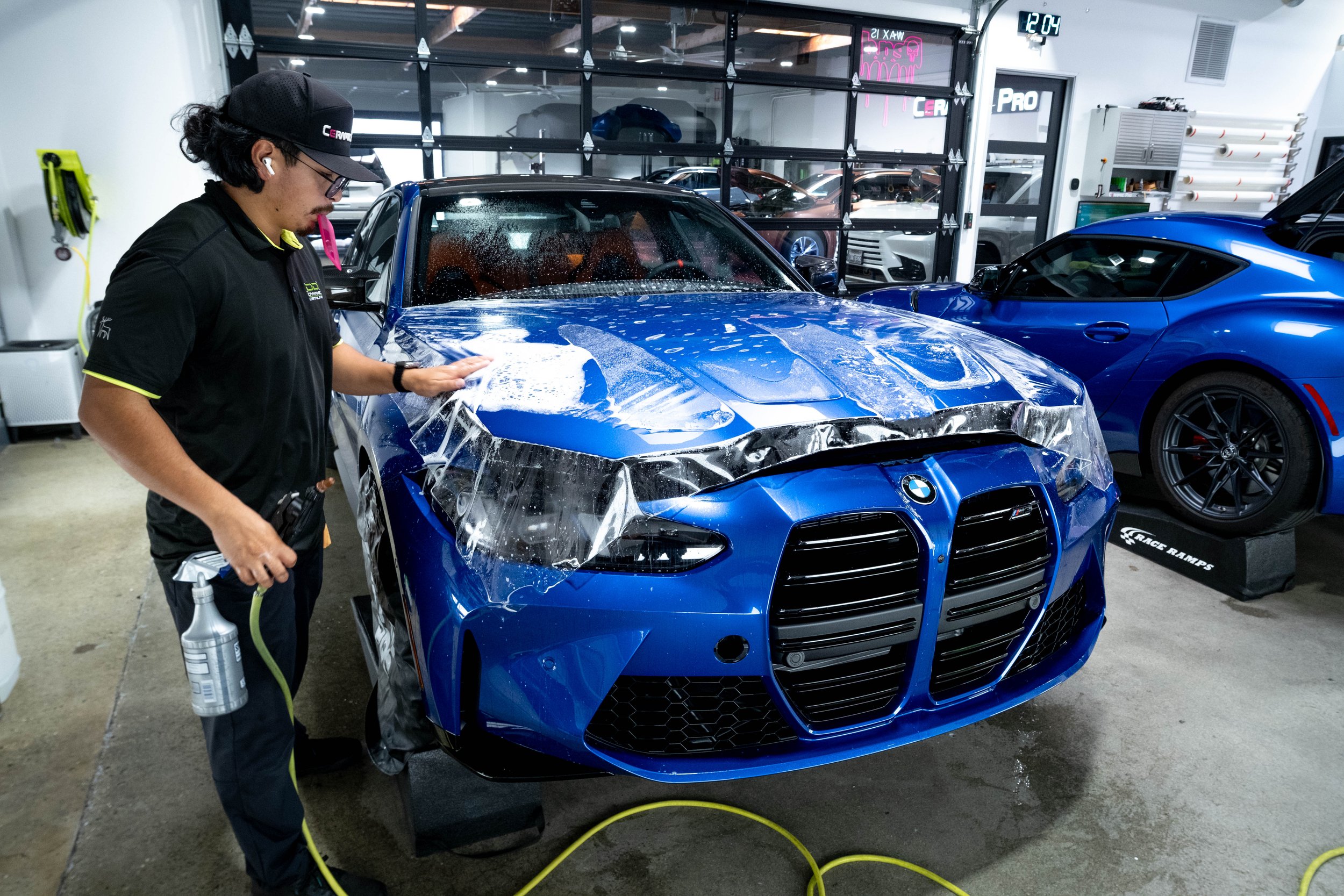
If you've been shopping around for paint protection film (PPF), you've probably noticed that prices can vary dramatically from one installer to another. You might receive one quote for $1,200 and another for $2,800 for what appears to be the exact same service.
So what's the difference?
The truth is, not all paint protection film is created equal. The brand, quality of the material, installation process, coverage, and experience of the installer all play a major role in the final price. And while saving money upfront can be tempting, choosing the wrong film or installer can end up costing you much more in the long run.
Let's take a closer look at what goes into a quality PPF installation, why some quotes are significantly cheaper than others, and what you should ask before trusting someone with your vehicle's paint.
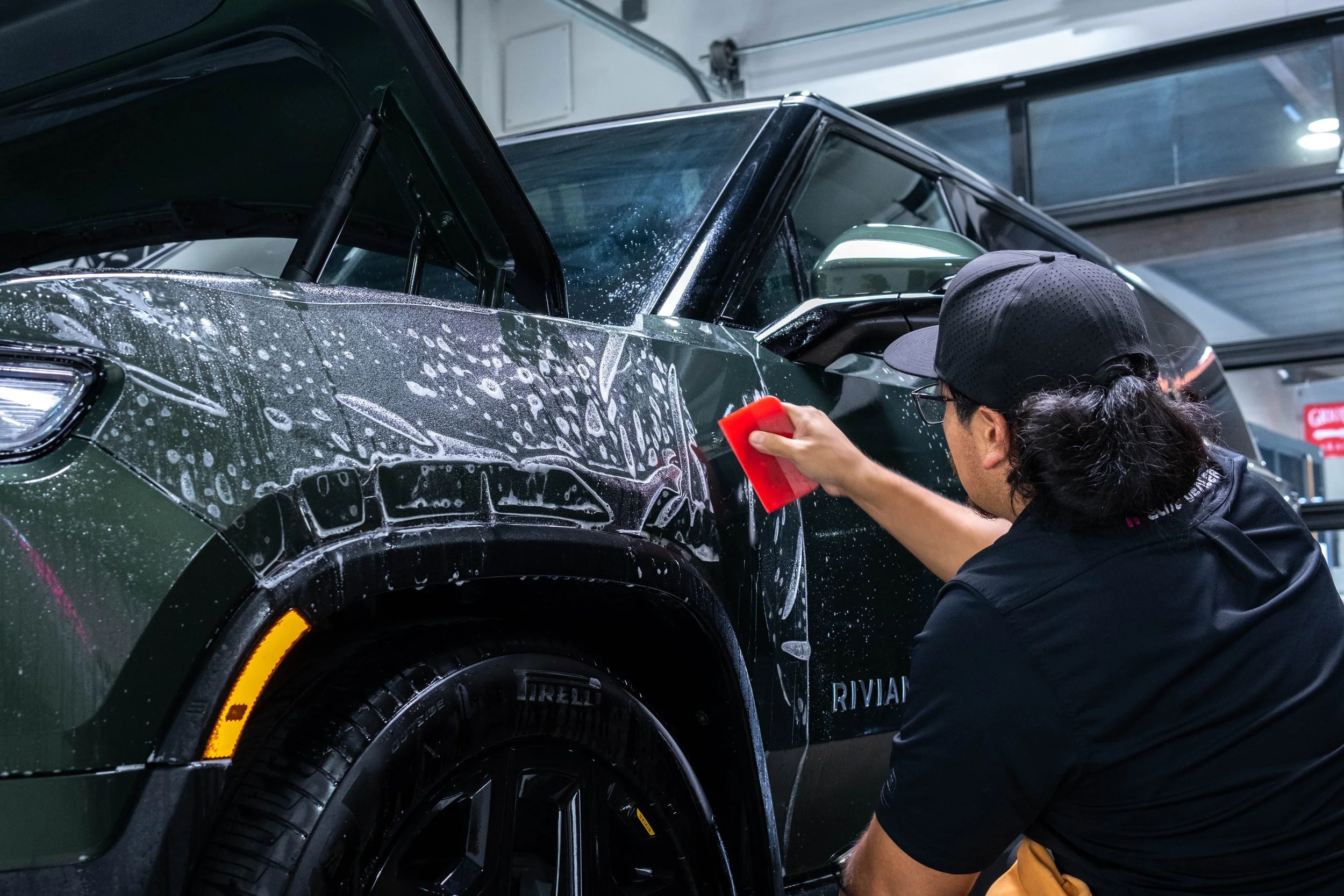
Not All Paint Protection Film Is Created Equal
Paint protection film is designed to protect your vehicle's paint from everyday road hazards, including rock chips, road debris, minor scratches, and environmental contaminants. However, the performance and longevity of that protection depend heavily on the film itself.
Established manufacturers such as SunTek, XPEL, and STEK produce films designed for long-term exterior protection. Depending on the product, these films may feature self-healing properties, stain resistance, UV protection, and manufacturer-backed warranties.
Lower-cost or unbranded films can be a different story. Some inexpensive films may begin showing signs of failure within a year or two, including:
Yellowing or discoloration
Loss of clarity or gloss
Cracking or becoming brittle
Edges lifting or peeling
Adhesive deterioration or excessive residue
This doesn't mean every lower-priced film will fail prematurely. However, when a product has no established manufacturer, published warranty, or traceable product information, it can be difficult to know what you're actually getting or who will stand behind it if something goes wrong.
A lower price isn't automatically a bad deal. But you should know exactly what material is being installed on your vehicle.
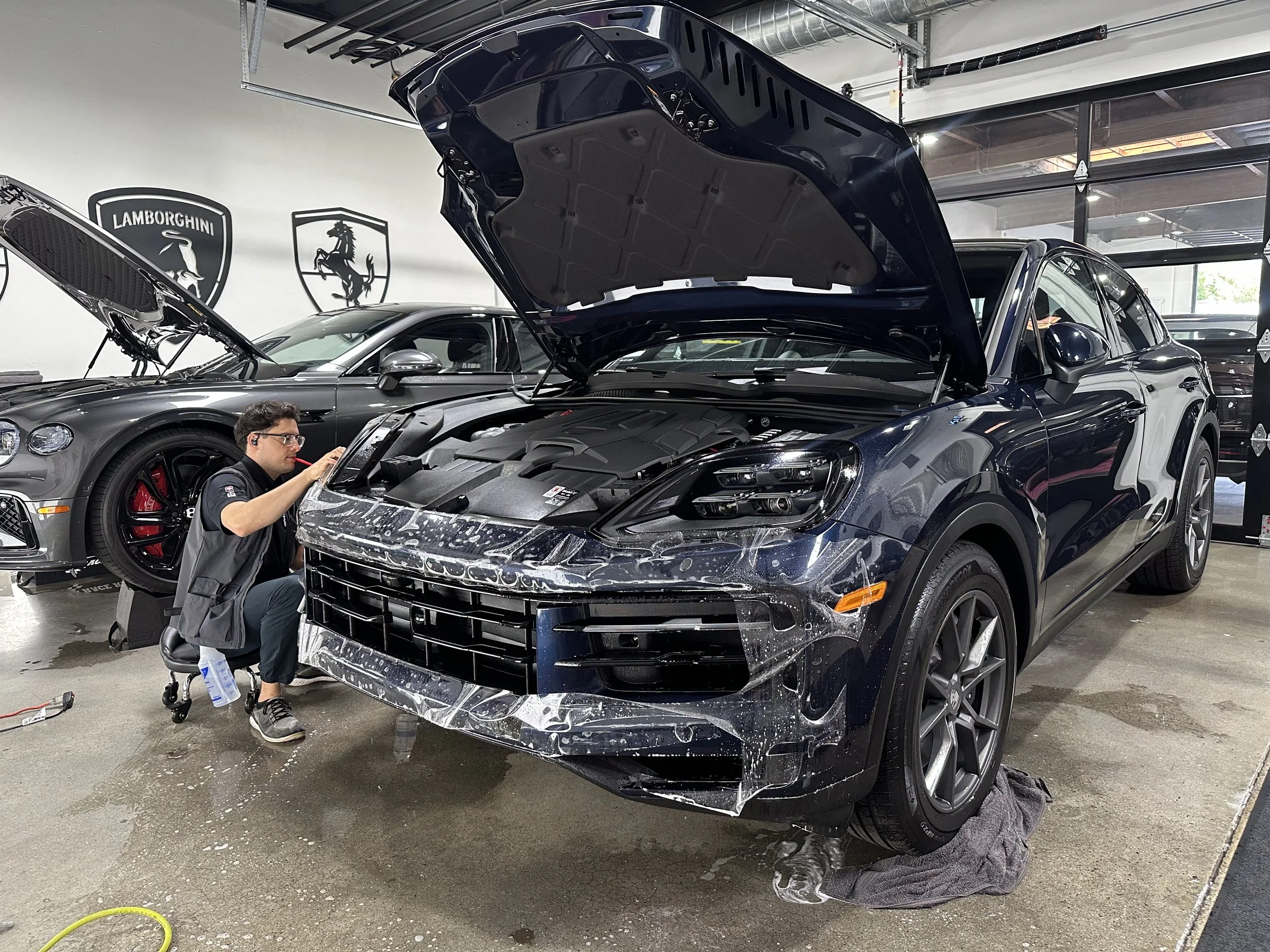
Why Do Some PPF Installations Cost $1,000 While Others Cost $2,500–$3,000?
This is one of the biggest questions we hear, and it's a fair one.
At Dynamic Detailing, a quality full-front PPF installation typically falls in the $2,500–$3,000 range, depending on the vehicle and coverage. When customers see quotes significantly below that, it's worth understanding what may be different.
First, consider the material itself.
Based on our experience purchasing film for professional installations, premium PPF rolls can cost approximately $1,200–$2,000, depending on the brand, product, and roll size. Lower-cost or unbranded rolls may be available for a few hundred dollars.
Those are approximate shop-side material costs, not universal prices. But they illustrate why the type of film matters when comparing quotes.
And material is only one part of the job.
A professional PPF installation also involves:
Vehicle preparation: Properly preparing the paint so the film can adhere correctly and the finished result looks clean.
Paint inspection: Identifying existing scratches, chips, defects, or areas that may affect the installation.
Pattern software: Access to vehicle-specific patterns and the software used to create accurate coverage.
Installation experience: Knowing how to work around complex curves, body lines, sensors, and difficult edges.
Precision and finishing: Taking the time to align the film, minimize visible seams, and achieve clean edges.
Clean installation environment: Keeping dust and debris from getting trapped beneath the film.
Warranty and support: Providing documentation, answering questions, and helping customers if an issue arises.
A quality installation takes time, experience, and the right equipment. You're not simply paying for a piece of film placed on your vehicle. You're paying for the material, the workmanship, and the process behind it.
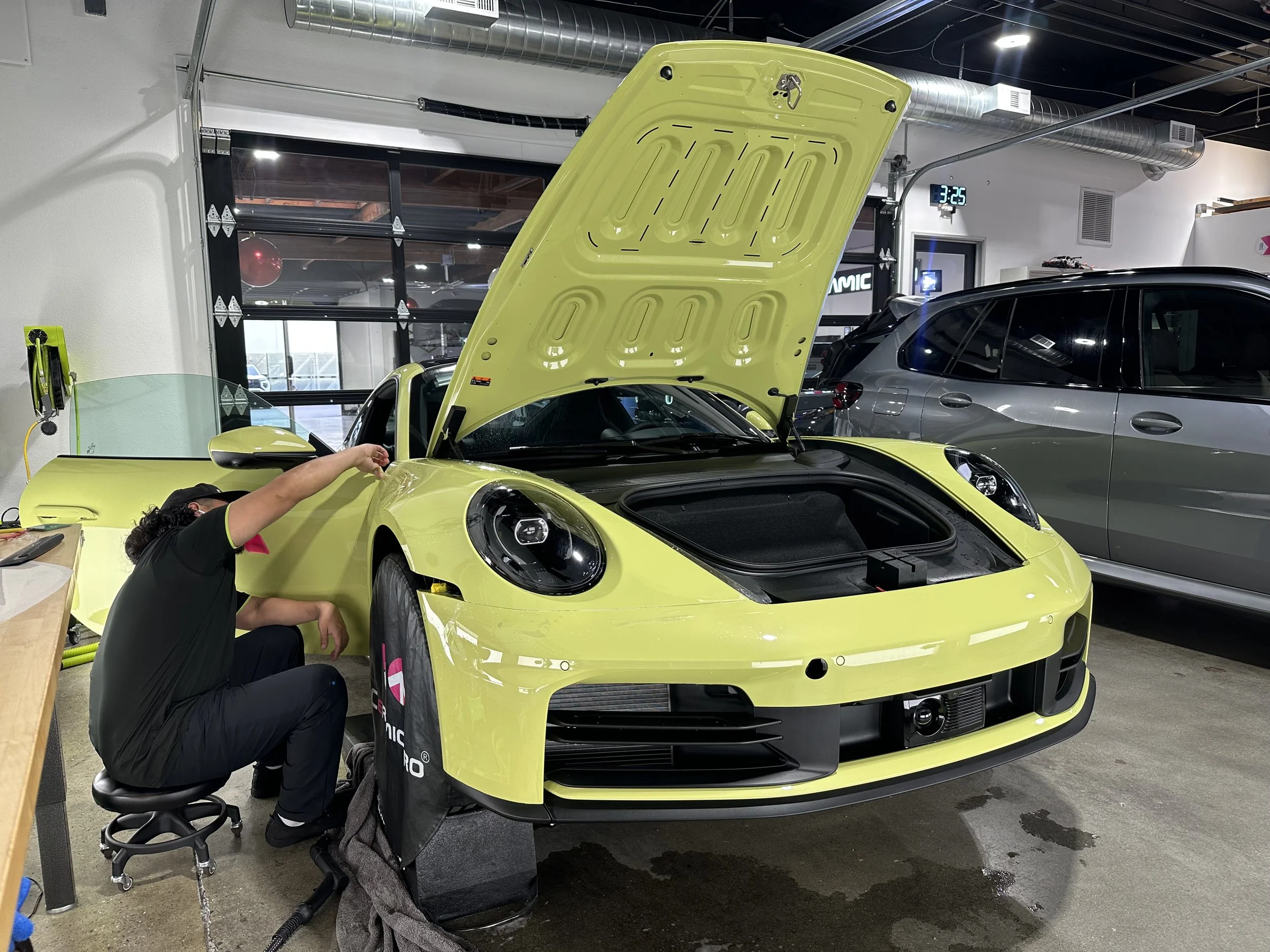
Make Sure You're Comparing the Same Coverage
Another reason PPF quotes can vary so much is that the term "full front" doesn't always mean the same thing from one shop to another.
A typical full-front package may include:
Full hood
Full front fenders
Front bumper
Side mirrors
Headlights, depending on the package
However, some quotes may only include a partial hood, partial fenders, and the front bumper. Others may exclude mirrors or headlights entirely.
Neither package is necessarily wrong, but they aren't equivalent.
Before comparing prices, make sure you know exactly which panels are being protected. A lower quote may simply include less coverage.
Ask for a written breakdown of the areas included so you can make a fair comparison.
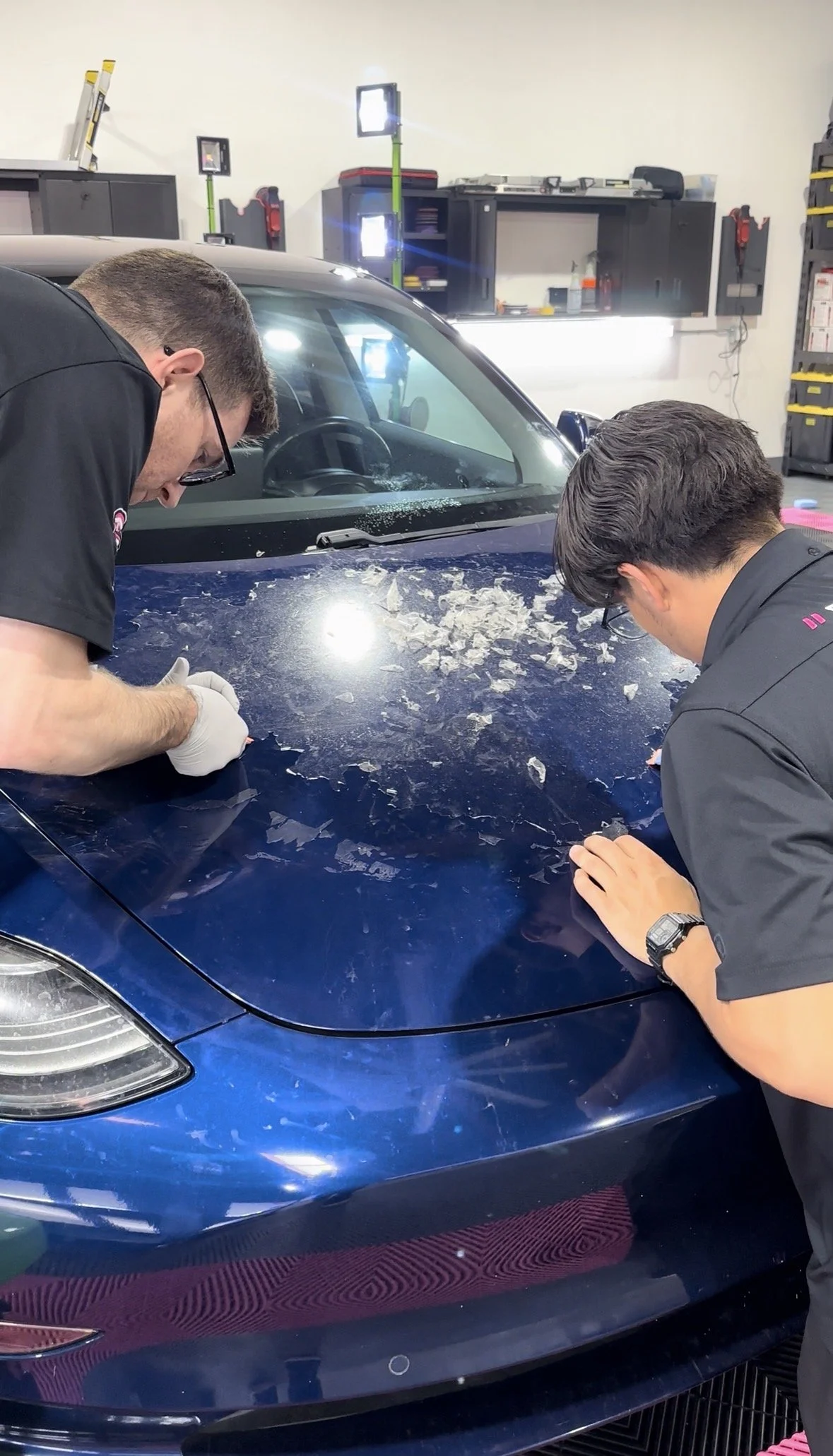
The Hidden Cost of Cheap PPF: Removal and Paint Damage
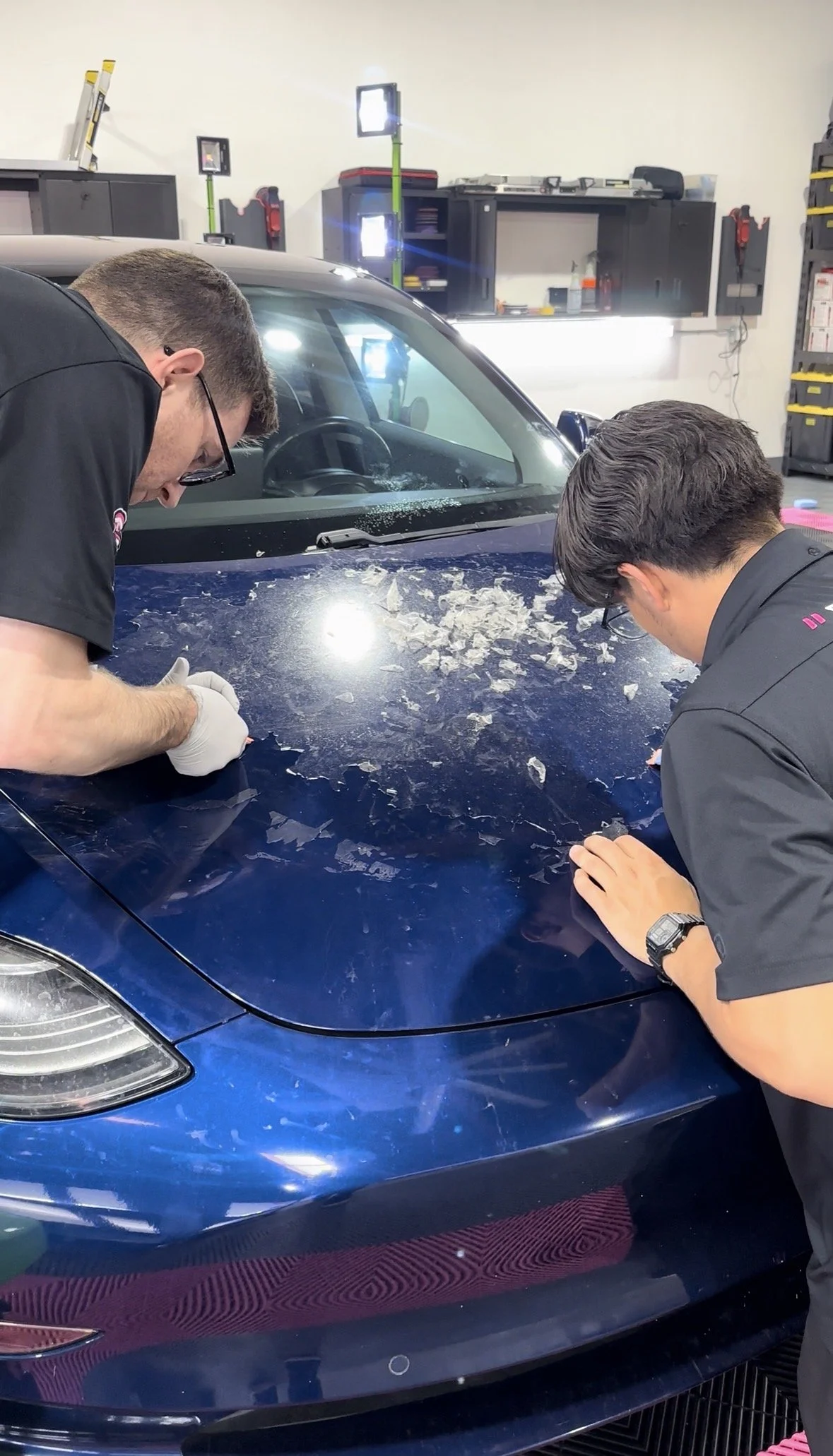
One of the biggest concerns with low-quality or improperly installed PPF is what happens when it's time to remove it.
Quality paint protection film is engineered to be removable when handled correctly and within its intended service life. However, removal becomes more difficult when film has deteriorated, become brittle, or experienced adhesive breakdown.
In some cases, removing severely degraded film can be a time-consuming and expensive process. Removal may even cost more than the original installation.
There is also the potential for paint damage.
This is especially important if the vehicle has been repainted, has poorly cured paint, or has existing paint defects. Even quality film cannot guarantee damage-free removal under every circumstance. The condition of the paint, the age of the film, and the removal technique all matter.
A professional removal process uses the appropriate temperature, tools, and technique to reduce the risk of damage. Rushing the process or using improper methods can create additional problems.
The takeaway? Don't just ask how much it costs to install the film. Ask who makes it, how long it's designed to last, what the warranty covers, and what happens when it eventually needs to come off.
What Makes Quality PPF Worth the Investment?
A quality PPF installation is an investment in protecting your vehicle's original paint.
Premium films are designed for long-term performance, with manufacturer warranty periods that vary by product. Some established products offer warranties around 8–12 years, subject to their specific terms and conditions.
Depending on the film, features may include:
Protection against rock chips and road debris
Self-healing properties for certain light surface scratches
Resistance to staining and environmental contaminants
UV protection to help preserve the underlying paint
Long-term clarity and gloss
Manufacturer-backed product warranties
For many owners, preserving the factory paint is about more than appearance. It can also help avoid costly paint repairs and maintain the vehicle's condition over time.
It's important to understand that a manufacturer's warranty isn't a guarantee that the film will look perfect for the entire warranty period. Coverage, exclusions, maintenance requirements, and the process for making a claim vary by manufacturer and product.
That's why the specific film matters just as much as the warranty length.
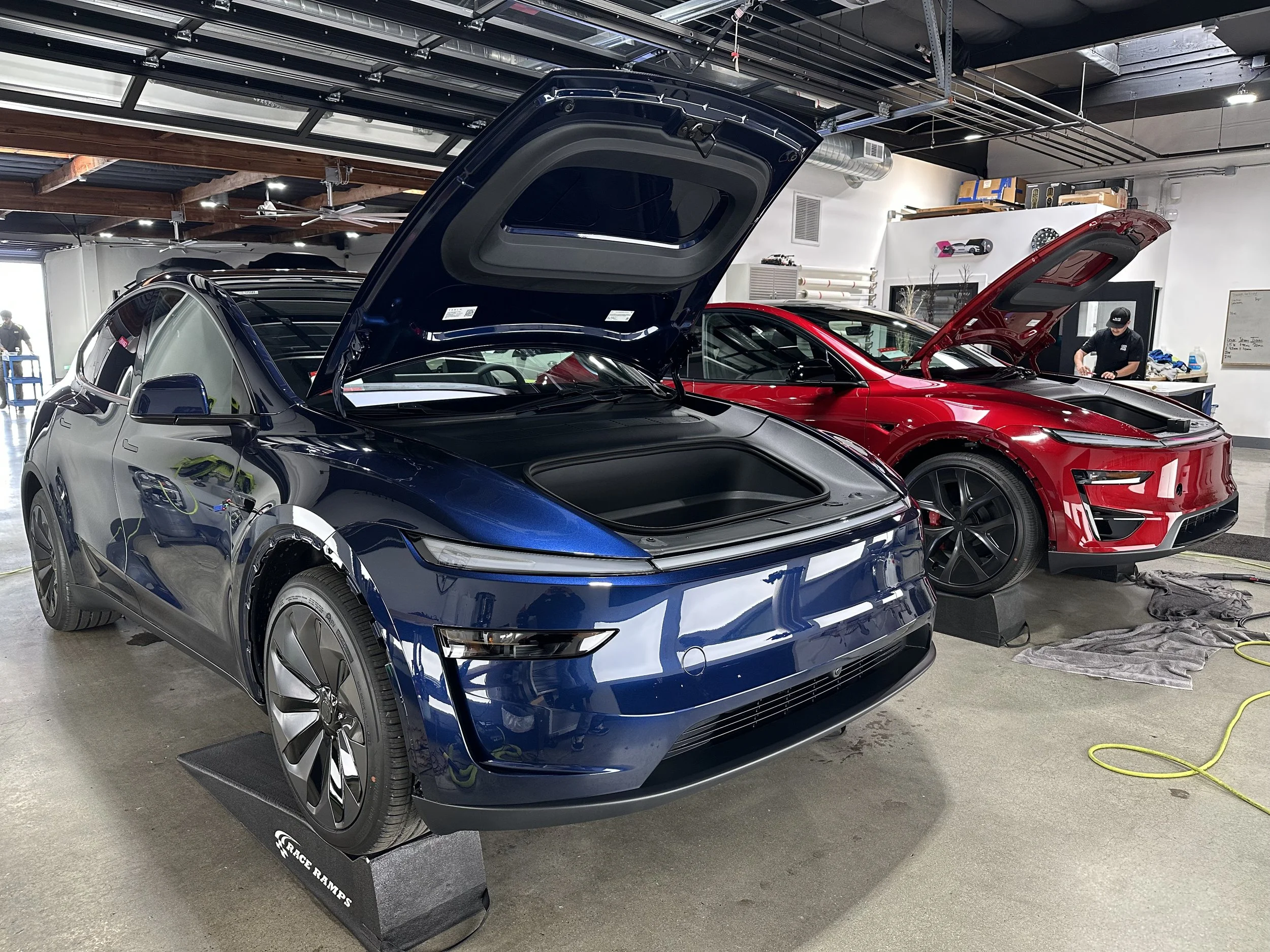
How to Verify Your PPF Installer Is Authorized
Here's something many customers don't realize: just because a shop advertises a particular PPF brand doesn't necessarily mean it is an authorized installer for that manufacturer.
Some shops may advertise well-known brands while using a different product. Others may have completed training in the past but may not have an active authorized dealer relationship.
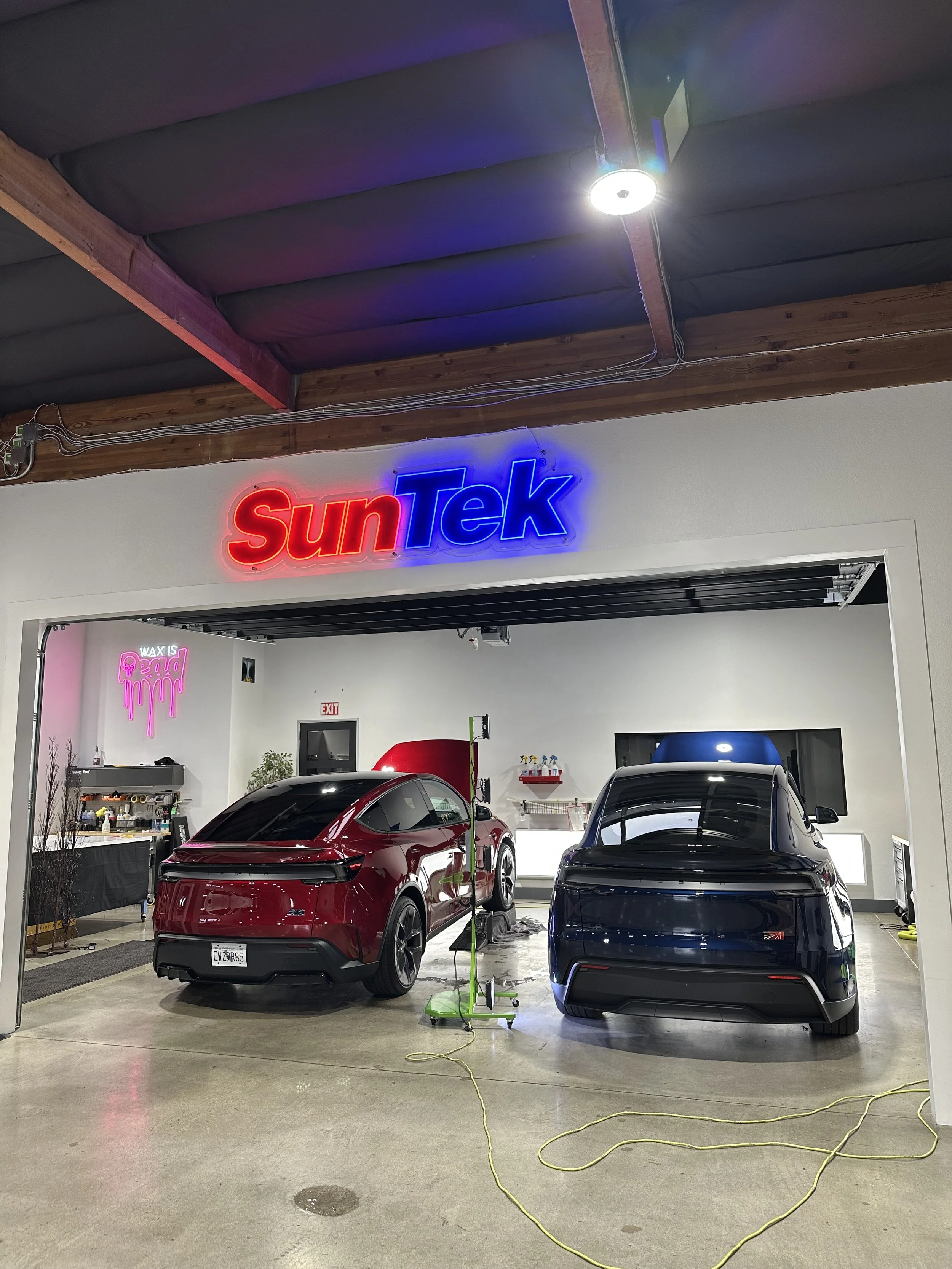
The easiest way to protect yourself is to verify the installer directly through the film manufacturer's website.
Here are a few official dealer and installer locators:
SunTek: Find an Authorized SunTek Dealer
XPEL: Find an XPEL Installer
If a shop tells you they install one of these brands, take a moment to check the manufacturer's locator or contact the manufacturer directly.
You should also ask the shop to identify the exact product being installed. For example, SunTek Reaction, SunTek Ultra, XPEL ULTIMATE PLUS, and STEK DYNOshield are specific product lines—not just generic descriptions of paint protection film.
Have the exact brand and product written on your estimate and final invoice. You should also receive the applicable manufacturer warranty documentation.
Questions to Ask Before Buying Paint Protection Film
Before committing to a PPF installation, here are a few questions worth asking any shop:
What exact brand and product line of PPF will be installed? Don't settle for answers like "premium film" or "high-quality PPF."
Are you an authorized installer for that brand? Can I verify your shop through the manufacturer's website?
What areas are included in the quote? Does full front include the full hood, full fenders, bumper, and mirrors?
What is the manufacturer's warranty? How long is it, what does it cover, and what exclusions apply?
Will I receive warranty documentation? Is the product registered with the manufacturer when required?
How are the edges finished? Ask how the installer handles visible edges, seams, and complex areas.
What happens if the film needs to be removed? Does the shop offer professional removal, and how is that handled?
Can I see examples of your previous installations? Look closely at edges, corners, and areas around sensors, headlights, and body lines.
A reputable installer should be comfortable answering these questions. If a shop can't tell you what product they're using or is unwilling to put it in writing, that's a reason to pause.
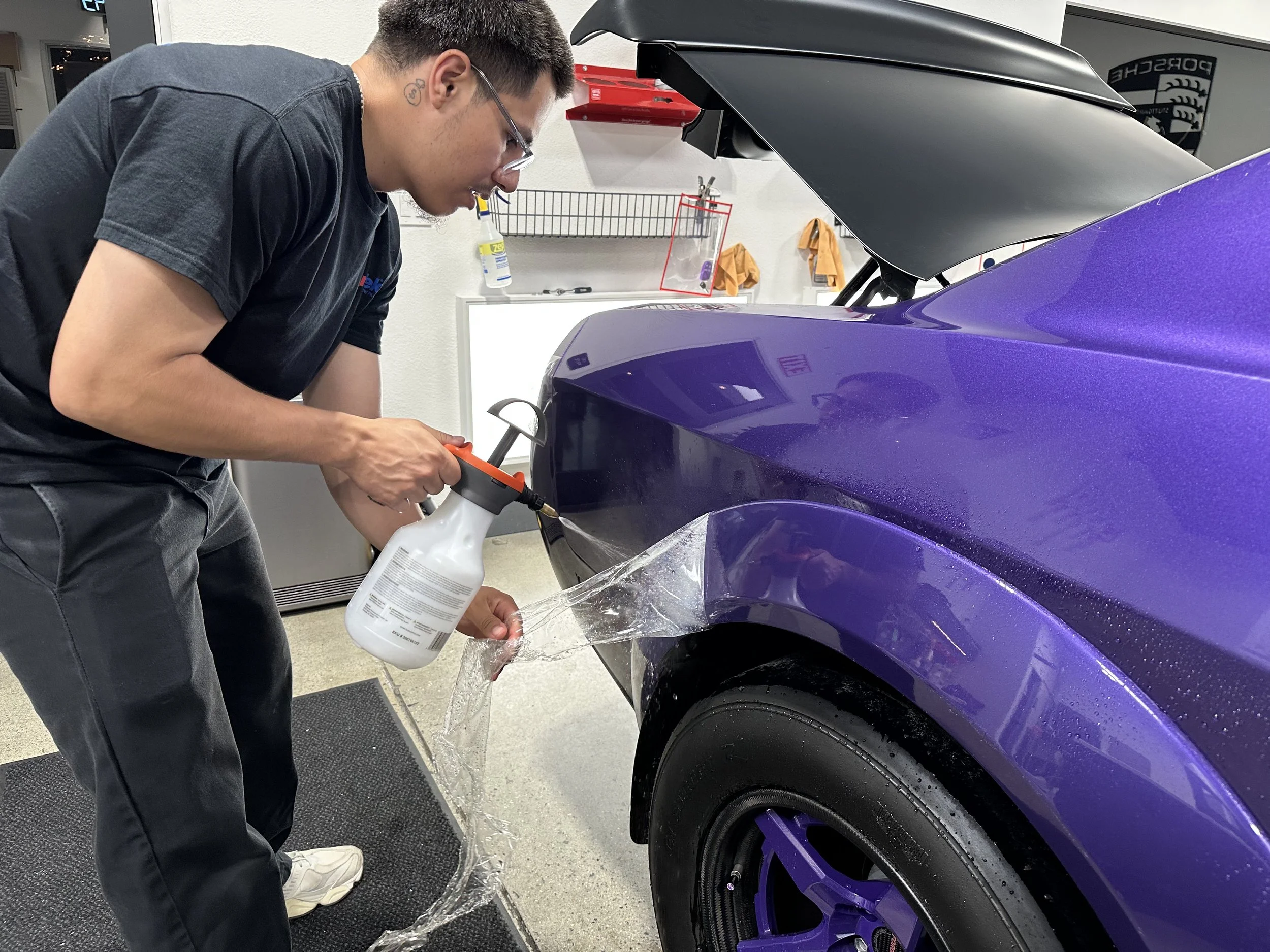
Why We Choose SunTek Reaction at Dynamic Detailing
At Dynamic Detailing, we believe the film you choose is just as important as the person installing it.
That's why we use SunTek Reaction for our paint protection film installations. We want to offer a product that meets our standards for clarity, durability, and long-term paint protection.
We also believe customers deserve to know exactly what they're paying for. That means clearly explaining the coverage, using quality materials, and taking the time to do the installation properly.
Our goal isn't to be the cheapest PPF installer. It's to provide an installation that we're proud to put our name behind and that our customers can feel confident about for years to come.
When you're protecting a vehicle you care about, the lowest quote isn't always the best value.
Final Thoughts: Buy the Film, Not Just the Price
Shopping for PPF shouldn't be confusing. You should know what film is going on your vehicle, how much of the vehicle is being covered, who is installing it, and what kind of warranty backs the product.
A low quote might be a great deal—or it might mean a different film, less coverage, or a different level of installation. The only way to know is to ask questions and compare the details.
Take the time to research the product and the installer before making a decision. A little homework upfront can help you avoid headaches down the road.
If you're considering paint protection film for your vehicle, we'd be happy to walk you through the options, explain the differences in coverage, and help you find the right solution.
Interested in protecting your vehicle's paint? Contact Dynamic Detailing to learn more about our SunTek Reaction PPF installations.